
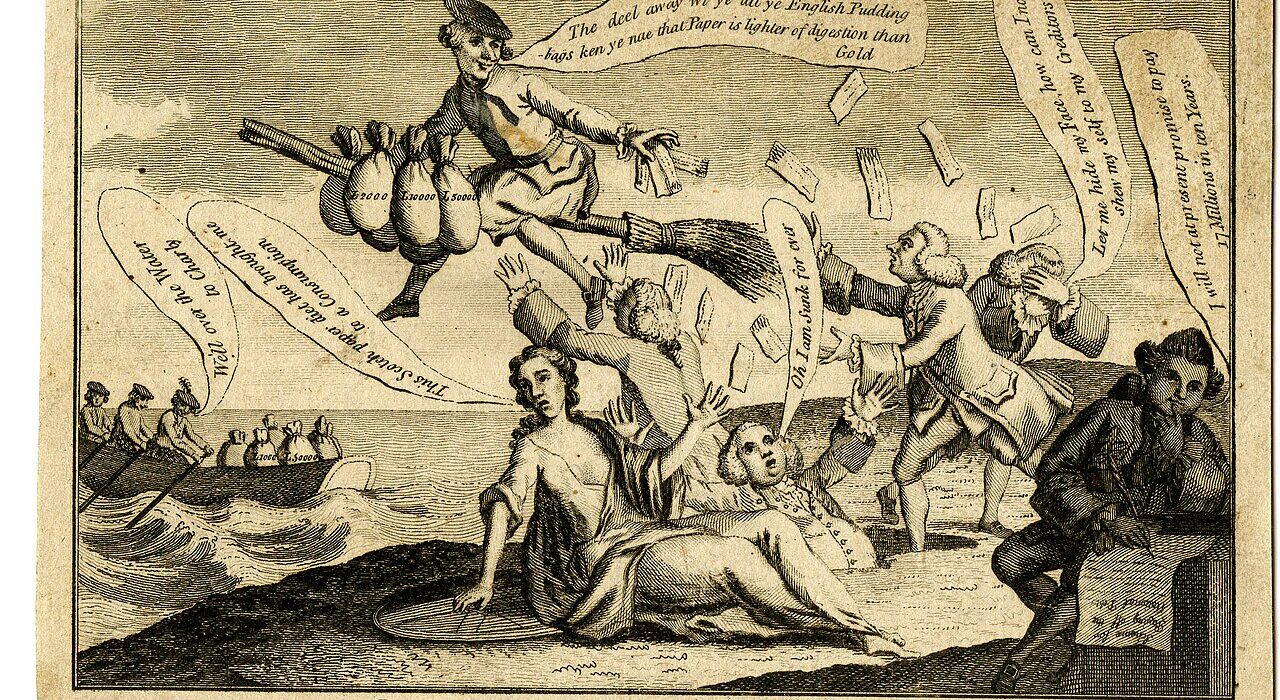
The Credit Crisis of 1772
The First Global Financial Contagion
Event Type: Financial Crisis
Date: 1772–1773
Primary Location: London, Great Britain
System Impact: Banking, Trade, Credit Networks
Overview
The Credit Crisis of 1772 represents one of the earliest documented cases of modern financial contagion, where failures in a localized banking network spread rapidly across borders through interconnected credit systems.
Originating in London, the crisis extended into Scotland, the Dutch Republic, and other European financial centers, revealing the systemic fragility of 18th-century finance.
Structural Background: The Rise of Credit Economies
By the mid-18th century, Britain operated on an increasingly complex credit-based financial system, relying on:
- Bills of exchange
- Promissory notes
- Interbank lending networks
These instruments enabled rapid economic expansion—but also created chains of dependency, where the failure of one institution could trigger widespread collapse.
Trigger Event: The Collapse of Alexander Fordyce
The crisis began with the failure of Alexander Fordyce, a partner in the London banking firm Neal, James, Fordyce & Down.
- Fordyce engaged in large speculative short positions on East India Company stock
- Rising stock prices led to significant losses
- In June 1772, he fled to France to escape creditors
This event caused immediate panic, as creditors rushed to recover funds.
Contagion Mechanism: How the Crisis Spread
1. London Banking Failures
- Multiple banking houses collapsed due to direct exposure
- Liquidity shortages triggered defaults
2. Scottish Banking Collapse
- The Ayr Bank (Douglas, Heron & Co.) failed
- Credit contraction spread across Scotland
3. European Transmission
- Amsterdam financial markets experienced stress
- Trade-dependent cities like Hamburg were affected
Economic Impact
- Merchant bankruptcies increased significantly
- Trade volumes declined
- Credit availability tightened across regions
- Confidence in financial institutions deteriorated
Intellectual and Historical Significance
The crisis influenced early economic thought, including the work of Adam Smith, who analyzed banking stability and speculative risk in The Wealth of Nations (1776).
References & Sources
- Neal, Larry. The Rise of Financial Capitalism (Cambridge University Press)
- Temin, Peter. “The Economic Consequences of the 1772 Credit Crisis”
- Kindleberger, Charles P. Manias, Panics, and Crashes
- Pressnell, Leslie. Country Banking in the Industrial Revolution
Related Archive Entries
- Collapse of London Banking Houses (1772)
- East India Company Financial Stress (1770s)